
When should you visit a dental clinic in Mount Royal for tooth pain or damage? Many people are not always sure what it means when they feel discomfort or see damage in a tooth. A dental crown is a common treatment used to protect a weak or damaged tooth. It acts as a strong cover over the tooth, helping restore its shape, strength, and function.
Knowing the signs early can help prevent serious dental problems and tooth loss.
What is a Dental Crown?
A dental crown is a protective cap that fully covers a damaged tooth. It is shaped like a natural tooth and placed over the original one to restore its strength.
People often consider dental crowns in Mount Royal when a tooth is too damaged for a filling or needs extra support to stay healthy.
Dental crowns help to:
- Protect weak or cracked teeth.
- Restore broken or worn teeth.
- Support teeth after large fillings.
- Improve chewing ability
- Improve smile appearance
They are designed to look and feel natural.
Signs You May Need a Dental Crown
There are clear signs that a tooth may need a crown instead of a simple filling.
Common warning signs include:
- Cracked or broken tooth
- Large cavity or deep decay
- Pain when chewing or biting
- A tooth that feels weak or sensitive
- Old filling that is breaking down
- Worn-down teeth from grinding
If any of these signs appear, it is important not to ignore them.
Why Do Teeth Become Weak or Damaged?
Teeth do not usually become weak overnight. Damage builds slowly over time for various reasons.
Common causes include:
- Untreated tooth decay
- Injury or accident
- Teeth grinding during sleep.
- Large or repeated fillings
- Natural wear and tear with age
- Weak enamel over time
When a tooth loses strength, a crown helps protect it from further damage.
What Happens if You Delay Treatment?
Delaying treatment for a weak tooth can lead to more serious problems.
Possible risks include:
- The tooth is getting more cracked or broken.
- Infection spreading inside the tooth
- Increased pain while eating or drinking
- There is a need for more complex treatment later.
- Risk of tooth removal
Early treatment is always easier and more comfortable.
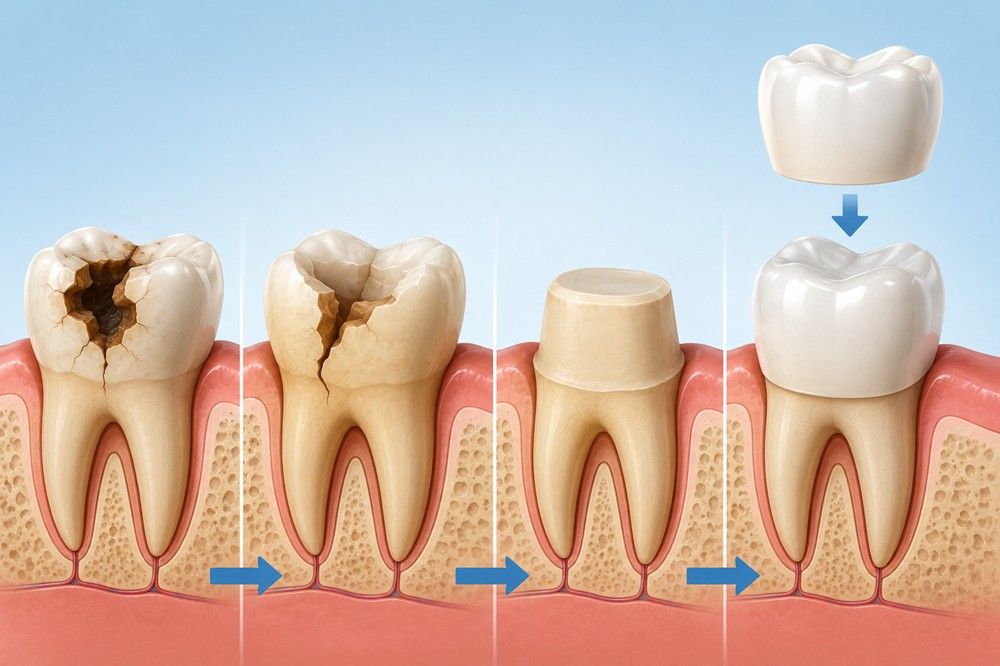
How Does a Dental Crown Work?
A dental crown is placed over a damaged tooth in a simple and careful process.
Steps usually include:
- Checking the tooth condition
- Removing decay or damage
- Shaping the tooth for a crown
- Taking impressions for a perfect fit
- Placing a temporary crown
- Fitting the permanent crown
Once placed, the crown helps restore normal tooth function.
Types of Dental Crowns
Different types of crowns are used depending on the tooth condition and location.
Common types include:
- Porcelain crowns (natural-looking)
- Metal crowns (very strong)
- Porcelain-fused-to-metal crowns
- Ceramic crowns (good for front teeth)
Each type has its own benefit depending on the need.
Benefits of Dental Crowns
Dental crowns offer long-term protection and improve oral health.
Key benefits include:
- Strong protection for weak teeth
- Natural-looking appearance
- Better chewing comfort
- Long-lasting solution
- Prevents further tooth damage
- Helps maintain overall oral health
They also improve confidence while smiling or eating.
Who Can Help Decide if You Need a Crown?
A professional evaluation is important to decide the right treatment. A dental clinic near you can check your teeth and determine whether a crown is needed.
A dentist may:
- Examine tooth damage carefully.
- Take X-rays if needed.
- Check gum and tooth health.
- Suggest treatment options
- Explain crown types and care.
This helps ensure the right decision for each tooth.
How to Take Care of a Dental Crown
A dental crown can last for many years if properly cared for.
Helpful care tips include:
- Brush teeth twice daily.
- Floss gently around the crown
- Avoid chewing very hard foods.
- Do not grind teeth without protection.
- Visit the dentist regularly.
Good care helps keep both the crown and natural teeth healthy.
What to Expect After Getting a Crown
After a crown is placed, the tooth usually feels normal after a short adjustment period.
You may notice:
- Slight sensitivity at first
- A new feeling when biting
- Quick improvement in comfort
- Better chewing ability
- Natural appearance of the tooth
Most people adjust within a few days.
Don’t Ignore Tooth Damage – Fix it Early!
Dental crowns are a reliable solution for protecting weak, cracked, or damaged teeth. Recognizing the early signs can help prevent serious dental problems and maintain a strong, healthy smile for years. Book your appointment today with Mount Royal Dental Choice and take the next step toward stronger teeth, better oral health, and a confident smile with trusted dental care.
FAQs
How do I know if I need a dental crown?
You may need a crown if your tooth is cracked, badly decayed, or too weak to support a filling safely. A dentist will check and confirm if it is the right option.
Is getting a dental crown painful?
The procedure is usually not painful because the tooth area is numbed. After treatment, you may experience mild sensitivity, which usually resolves in a short time.
How long do dental crowns last?
With good oral care and regular checkups, dental crowns can last for many years before needing replacement.
Can a crown fix a broken tooth?
Yes, dental crowns are commonly used to repair broken or heavily damaged teeth and help protect them from further damage.